

Aug 30 2013
Women of Alexandria House: Tabia’s Story
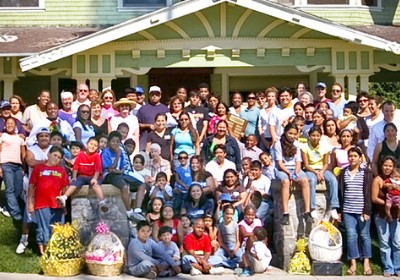 In our on-going weekly coverage of the Women of Alexandria House, part of our Real People, Real Stories series, Uprising producer Bipasha Shom brings you the stories of women who have lived in transitional housing. They all come from different places and have experienced a variety of challenges, but what ties them together is the courage and resilience they find …
Comments Off on Women of Alexandria House: Tabia’s Story
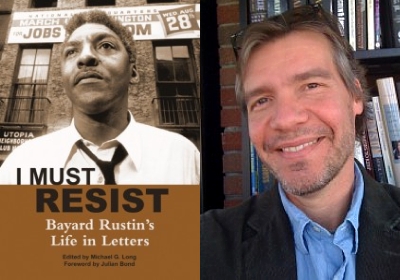 Before President Obama awarded Bayard Rustin the Presidential Medal of Honor this year, most Americans may never have heard of him. Rustin, one of the most important civil rights organizers of his time, was also the principle organizer of the 1963 March of Washington which we are commemorating each day this week on the occasion of its 50th Anniversary.
 Uprising’s Thursday guest expert Arun Gupta, Independent Journalist and regular contributor to the Guardian, In These Times, The Progressive, and Truthout, and co-founder of the Occupied Wall Street Journal and the Indypendent, analyzes today’s news headlines:
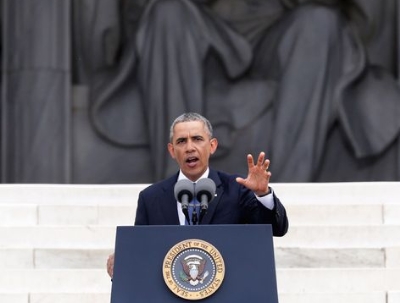 President Obama addressed a 50th anniversary commemoration of the March on Washington yesterday, at an event entitled Let Freedom Ring. Although he had warned ahead of time that his speech would not be as good as Dr. King’s speech in 1963, he channeled a fiery spirit not seen in recent times.
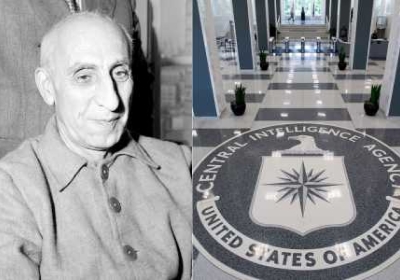 Sixty years ago last week, Iran’s new experiment with democracy was cut horribly short when Prime Minister Mohammad Mossadegh was overthrown in a coup.
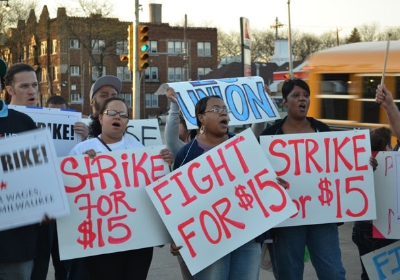 Fast food workers in at least 60 cities including Los Angeles are rallying for higher wages today with a one-day walkout and strike. Workers in other retail chains like Macy’s and Sears have joined today’s one-day strike in solidarity with fast food workers.
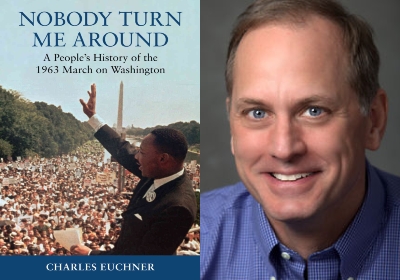 We continue our coverage today of the historic March on Washington for Jobs and Freedom, of which today is the actual anniversary.
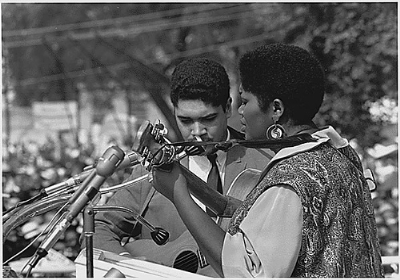 A crucial aspect of the March on Washington in 1963, and the civil rights movement in general, was the music of the movement. Artists from all over the country, black and white, expressed themselves through music. African American spirituals in particular, formed the basis for many popular folks songs of the time, calling for freedom and racial equality.